Fabien CharneuxHands-on notes on operations and projectsFrançais

About

About Fabien Charneux, General Manager

Seven years running operations in Asia: a Tier 1 automotive plant in China, where I led the sale through to closing, then a technical-bag manufacturer in Vietnam. I learned the trade over twenty years in SNOP, a European Tier 1 group that tripled its revenue between 2010 and 2024.

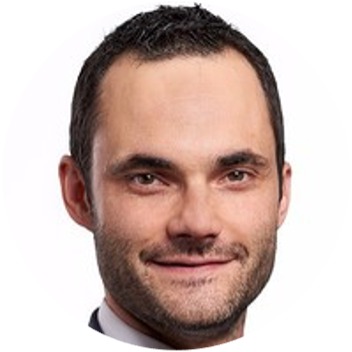
Portrait of Fabien Charneux

At a glance

General Manager with seven years leading operations in China and Vietnam. Largest P&L so far: a €20M plant of up to 150 people. Led the sale of a plant through to closing and brought three acquired plants onto one production system. Glad to compare notes with groups that run several sites in Asia.

  • 7+ yearsleading operations in Asia, in China and Vietnam
  • €20Mown P&L in China: seven direct reports, up to 150 people
  • €80Mequivalent revenue and €30M CAPEX managed through six project managers
  • M&Aled the sale of the China plant through to closing
  • +20–25 %FFG Bags revenue in two years

Profile

From Tier 1 scale to structured growth

For twenty years I grew with SNOP, an automotive stamping and assembly group that went from about €630M of revenue in 2010 to €1.85bn in 2024 and ranks among Europe’s Tier 1 leaders. I moved from project management, with up to €80M of equivalent annual revenue and €30M of CAPEX under my teams, to bringing three acquired plants onto the group production system and SAP, created the innovation function, then ran the group’s China subsidiaries from 2019 and led the sale of the plant when the group reorganised. In China I led the business through two legal entities and seven direct reports: a plant of up to 150 people and €20M of revenue, and a tooling engineering and purchasing company, plus a sales office in Shanghai. The path there ran from matrix project teams to a department of direct reports, a group function, then a country with its own management team.

With the plant sold, I chose the opposite scale on purpose: to build processes rather than run established ones. FFG Bags is a young, French-led technical-bag factory of about 150 people in Vietnam, and the mandate is to move a small, people-dependent business onto processes, management systems and reliable data, so it serves customers consistently and keeps growing safely. Revenue is up 20 to 25 % in two years. A clearer development offer and a website rebuilt for search and AI answer engines multiplied inbound enquiries, and customer requests no bag factory could serve became FFG Industrial, an engineering offer launched in September 2026. The hardest lesson was not designing processes but changing habits: in a small company an activity often rests on one person, so a change has to be built with them, not for them. My Executive MBA gives me the frame for both the strategic and the operational side.

People come first in how I manage. In France, China and Vietnam I have worked on the same things: clear and regular communication, managers who coach rather than only control, and moments that let a group become a team. That mattered most in hard periods, such as Covid and the sale of the China plant. My test of a good team is that it holds together without its leader.

Data and AI are my lever. Structured data turns individual know-how into company capability, and AI makes it usable at a scale a small team could not reach alone. One rule guides the work: each piece of information is entered once, then reused and tracked across the company, with people keeping every decision that matters.

Current work

Transformation in progress

Three initiatives at FFG Bags: a new business line just launched, and two pilots on the shop floor and in the office. They are shown for the thinking and the method rather than for finished results.

Delivered

Following the customer beyond the bag: FFG Industrial

FFG Bags · customer needs from 2025, official launch September 2026 · engineering for SMEs manufacturing in Asia

The challenge

Brands buying technical bags rarely need only the bag. As FFG's development work grew, customers kept asking for help with the parts around it: a buckle that does not exist on the market, foam padding cut to their equipment, a fitted case, a box. A bag factory can either decline those requests or treat them as a market signal: smaller European and North American companies want to manufacture in Asia, but lack the engineering and supplier knowledge to define a part clearly before asking for quotes.

What we built

FFG Industrial, officially launched in September 2026, is a dedicated engineering offer and brand of FFG Bags, sharing the same team and resources rather than being a separate company. It extends the factory's development method beyond textiles. It turns a customer's requirement into a mechanical definition, reviews it for design to cost and manufacturability, prepares a supplier-ready technical package, and can coordinate manufacturing through a partner network in Asia. It covers foam, injection-moulded plastic, metal, textile and multi-material parts, and fitted transport cases. First projects, all delivered: a rotating buckle for belt and MOLLE attachment, developed by FFG, sold alone or built into a bag; custom foam padding; custom boxes. Further projects are in progress.

  1. 1Customer request
  2. 2Mechanical definition
  3. 3Design to cost and manufacturability review
  4. 4Supplier-ready package
  5. 5Manufacturing through the partner network
The customer approves the design and the package. Engineering can be bought on its own, before manufacturing.

What it lets managers see

  • Requests a company cannot serve are market research it does not have to pay for.
  • Clear engineering before supplier quotation lowers risk for a small buyer far more than a lower unit price does.
  • One development partner across soft goods, foam, plastic and metal makes FFG harder to replace for the customer.
  • Engineering can be bought on its own, and the customer keeps final approval of the design: trust first, volume later.

Next step: Complete the projects in progress and extend the offer to further industries.

New businessProduct developmentDesign to CostSourcing in AsiaInjection mouldingFoam

In pilot

Making a labour-intensive workshop measurable

FFG Bags, 2026 · in-house sensors on the stitching machines

The challenge

FFG Bags makes bags and backpacks: tactical, outdoor, everyday-carry and industrial, in small and medium runs for international brands. It is labour-intensive work. Sewing machines are inexpensive, and output depends on skilled hands and varies from one station to another and from one day to the next. In sewing lines of up to 40 operators, the whole line runs at the pace of its slowest station. At SNOP, my previous employer in automotive stamping, it was the opposite: expensive presses that produce their own data and run consistently once set up. Here the variance is large, and it cannot be managed until it is measured.

What we built

We designed the sensor and its data acquisition principles to fit our own infrastructure. Each unit is dedicated to one specific machine and picks up a signal that is a very good proxy for how intensely it is used. The parts are inexpensive electronic components, bought separately, then assembled and configured in-house with AI support. A pilot on a few machines worked well and quickly showed large differences worth asking production staff to look at. The next step compares machine running time with actual output, with the workers informed. It is a deliberate proxy, not a productivity or efficiency measure.

  1. Station 1
  2. Station 2
  3. Station 3slowest
  4. Station 4
  5. Station 5
  6. Station 6
Work piles up before the slowest station and starves the ones after it, so the whole line runs at its pace. The sensors point to the likely bottleneck.

What it lets managers see

  • The signal alone cannot assess productivity or efficiency. Its value is to open eyes: it points to the extremes, to specific patterns, and to possible machine trouble, so people know where to look.
  • The machine that runs the most in a line points to a likely bottleneck. If the one that runs the least is last in the line, the constraint sits upstream.
  • Machine signals show where to look first across lines and days: line balancing, training, maintenance or material supply.

Next step: Validate the data, then compare running intensity with actual output so the proxy becomes a routine line-balancing tool, with the workers informed.

Shop-floor dataIoT sensorsLine balancingLabour productivity

In pilot

A data and AI backbone for a young factory

FFG Bags, 2025–2026

The challenge

A small, fast-growing company ran on individual know-how, with the same information typed again in several places. A large rise in inbound enquiries made that untenable.

What we built

An equipment register with machine QR codes and maintenance records. A lead-management workflow with AI-assisted data capture and analysis. A structured path from customer inquiry to approved sample, with Pre-BOM, sourcing and material-availability workspaces.

Information entered once
  • Lead and inquiry
  • Costing
  • Sample and Pre-BOM
  • Sourcing and materials
  • Production and maintenance
  • Management reports
Reused and tracked at every step, with a named person approving each decision.

What it lets managers see

  • One rule throughout: each piece of information is entered once, then reused and tracked.
  • AI processes as much of the data as possible, so staff time goes to judgement, not re-typing.
  • Every decision step keeps a named human approver.

Next step: Full staff adoption, then measured benefits on complete real projects.

Digital transformationAIProcess structuring

Beyond the day job

Personal projects & community

What I build and take part in outside work. The method is the same as in the factory: define the problem, measure, put a control around the risk, and keep what works.

Board role

Vice-President, ESSEC Alumni Vietnam

ESSEC Alumni Vietnam · chapter board · since September 2026

I joined the board of the ESSEC Alumni Vietnam chapter as Vice-President in September 2026.

  • The board's work centres on networking events that connect alumni and the wider business community in Vietnam, and on mentoring.
  • The role builds on my Executive MBA with ESSEC and Mannheim (2019).
Alumni networkMentoringNetworking eventsVietnam

Experience, scope and track record →